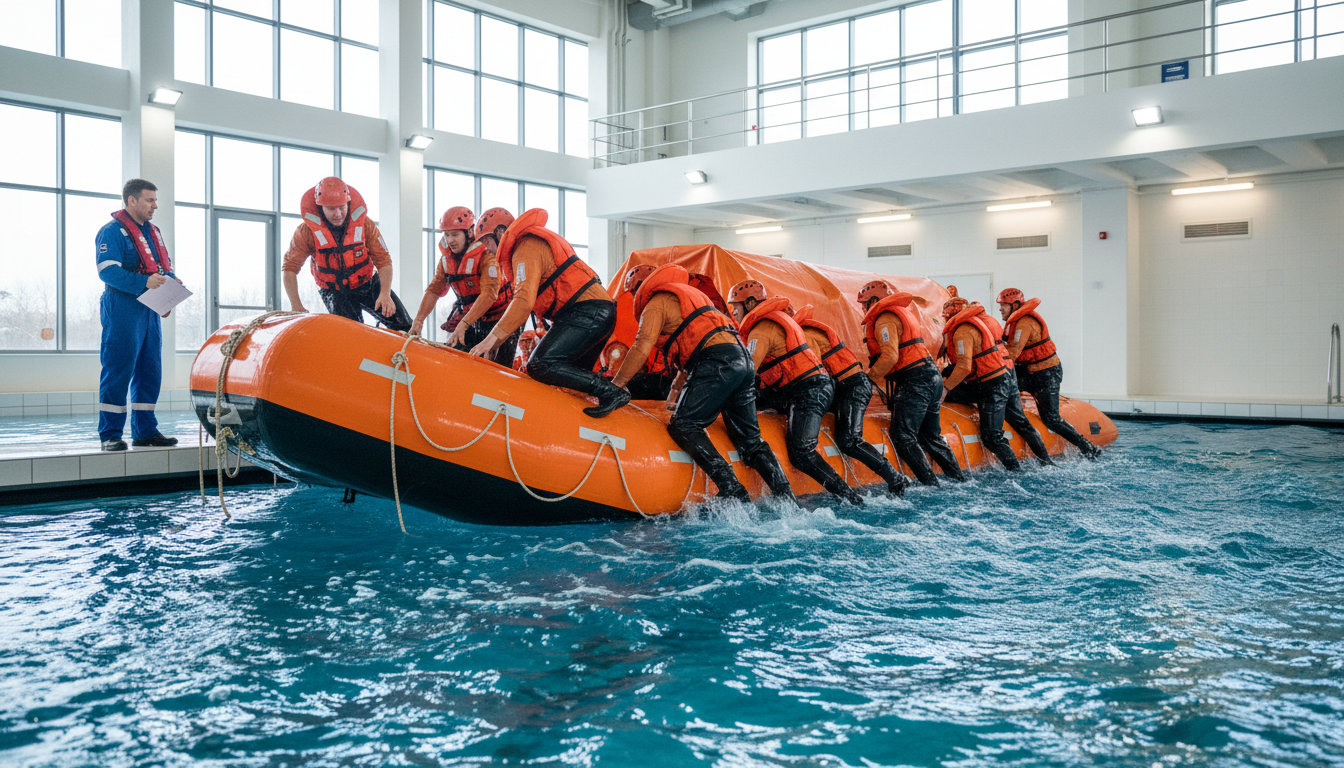
STCW Basic Safety Training is a short, mostly practical course that teaches you to survive and stay safe at sea: fighting fires, abandoning ship, giving first aid and working safely as part of a crew. It is the minimum certificate almost every yacht asks for, even for entry-level deckhands and stewardesses, so it is usually the first thing you book after deciding to work on yachts.
What does STCW stand for?
STCW stands for the International Convention on Standards of Training, Certification and Watchkeeping for Seafarers. It is an international maritime convention that sets minimum training standards for people working at sea. In yachting, “doing your STCW” almost always means the entry-level Basic Safety Training package, sometimes called BST or STCW Basic Training.
The five parts of STCW Basic Safety Training
The course is made up of five elements (Dockwalk):
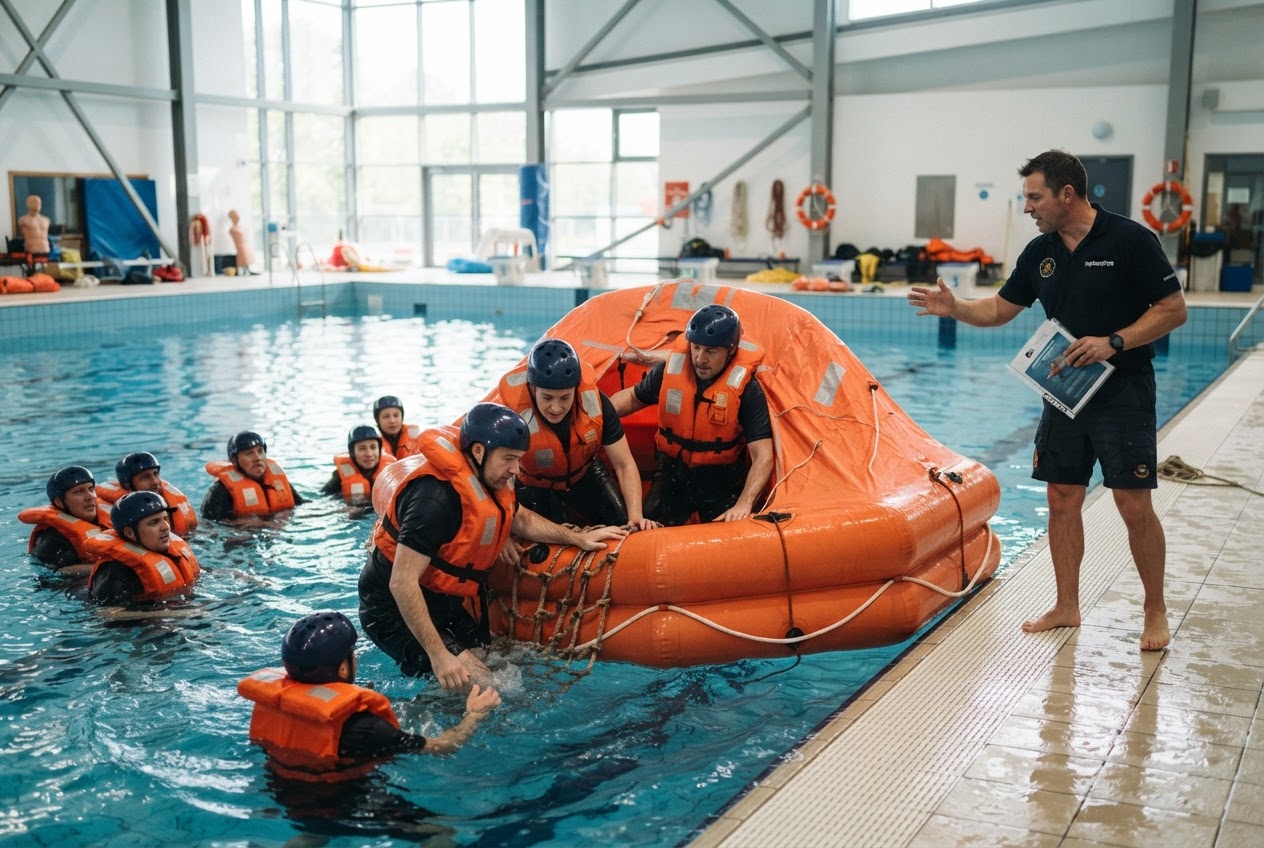
- Personal Survival Techniques: putting on a lifejacket and immersion suit, launching and boarding a life raft, and surviving in the water. Expect a pool session.
- Fire Prevention and Fire Fighting: how fires start and spread on board, using extinguishers and hoses, and working with breathing apparatus in a smoke-filled space.
- Elementary First Aid: CPR, bleeding control, burns, fractures and what to do until professional help arrives.
- Personal Safety and Social Responsibility: accident prevention, safe working practices, communication and living as part of a crew.
- Proficiency in Security Awareness: recognising security threats such as piracy and armed robbery, and what to do if one arises. It was added to the basic package by the 2010 amendments to the STCW Code.
How long does the course take?
Most schools run Basic Safety Training over about five consecutive days (Dockwalk). Some package it with extra time or other courses, so the length varies by provider: one Australian academy runs its STCW course over eight days, for example (Superyacht Crew Academy). Many schools also offer packages that add a deckhand or interior course straight after the STCW week.
How much does STCW cost?
Prices depend on the country and school, and they change, so always check the current price with the provider. As a rough guide, Dockwalk reported typical costs of about £700–£1,000 in the UK and Europe and about US$900–$1,000 in the United States (Dockwalk, 2021). One Australian academy lists its eight-day course at AUD 2,445 (Superyacht Crew Academy). Remember to budget for accommodation and travel if you take the course away from home.
Where should you take it?
You can take STCW in many countries, but there is a practical argument for taking it in a yachting hub such as Antibes, Palma, Fort Lauderdale, Gibraltar or Cape Town. You meet other new crew, you are already where the yachts are when you finish, and you can start dockwalking the week after. Training at home is often cheaper, though, and the certificate is the same standard wherever it is issued by an approved school.
Before you book, check that the school is approved by a recognised maritime administration (for example the UK Maritime and Coastguard Agency or another flag state), that the certificates it issues will be accepted by the yachts you are aiming for, and what exactly is included in the price.
Do you need to refresh STCW?
Yes, partly. Under the 2010 Manila amendments, the two basic modules that must be updated every five years are Fire Prevention and Fire Fighting and Personal Survival Techniques. Elementary First Aid and Personal Safety and Social Responsibility do not strictly require revalidation, but some certificates show an expiry date and some flag states, companies or insurers may not accept them after it (Bluewater). The refresher course is shorter than the original. Put your five-year date in your calendar and on your CV.
What to do before and after the course
- Book your ENG1 medical first. If a health issue rules you out, you find out before paying for training. Read our ENG1 guide.
- Ask about package deals. STCW plus a deckhand, powerboat or interior course is often cheaper together.
- Scan every certificate the day you receive it and keep copies on your phone.
- Update your CV with the certificate name, issue date and expiry date. See how to write a yacht CV.
Frequently asked questions
Can I do STCW online?
Some schools offer blended courses with online theory, but the practical parts, such as fire fighting and sea survival, have to be done in person. Check that any blended course leads to a certificate accepted by your target flag state.
Is STCW enough to get a yacht job?
It is the minimum, not a guarantee. Captains also look at your experience, attitude, presentation and availability. Follow our step-by-step guide to getting a job on a yacht with no experience.
Is the course hard?
It is physically demanding in places, especially the pool and fire fighting sessions, but it is designed for beginners. You need to be comfortable in water and willing to follow instructions under pressure.
Certificates done? Time to apply. Our Yacht Job Application Kit gives you yacht CV templates, email scripts for captains and crew agents and a four-week job hunt plan. Or start free with our Dockwalking Checklist.
Leave a Reply