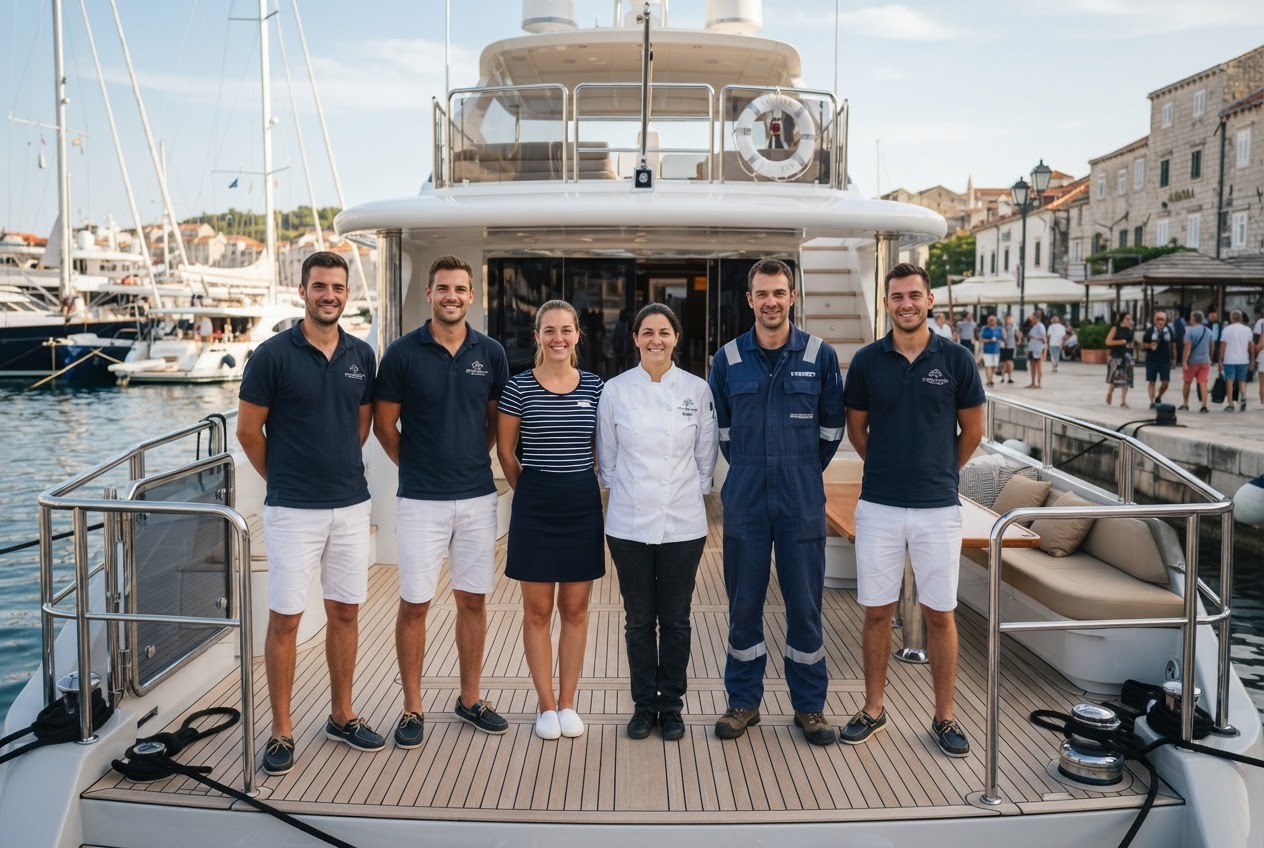
A superyacht runs like a small floating hotel with its own engineering team. Crew work in four departments: deck, interior, engineering and galley, all under the captain. Knowing who does what helps you pick the right department, write a focused CV, and understand who you are talking to when you dockwalk.
Where beginners start
With no experience, there are three realistic entry roles:
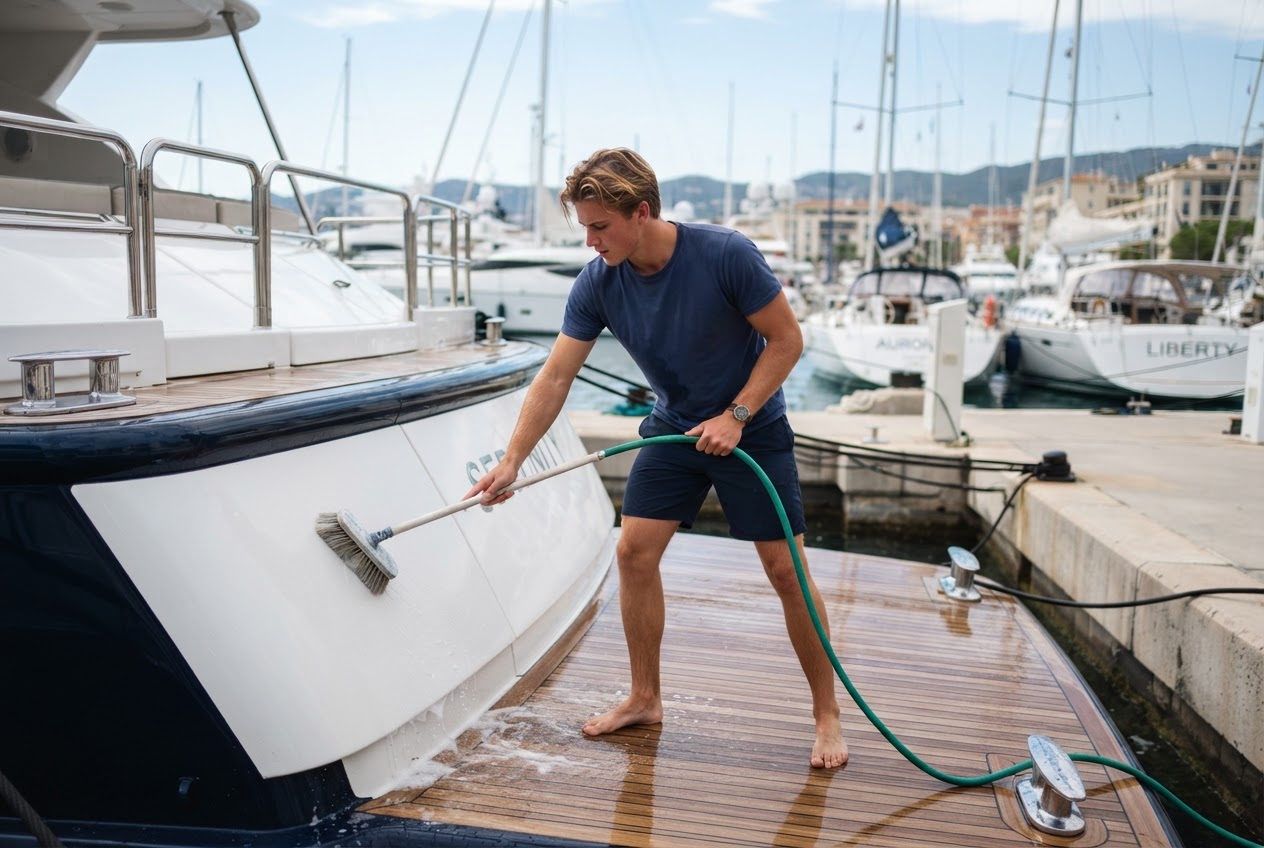
- Junior deckhand: exterior cleaning and maintenance, tender care, line handling, helping with guest water sports.
- Junior steward or stewardess: cabin cleaning, laundry and guest service.
- Stew/deck: a mixed role on smaller yachts, splitting time between interior and deck.
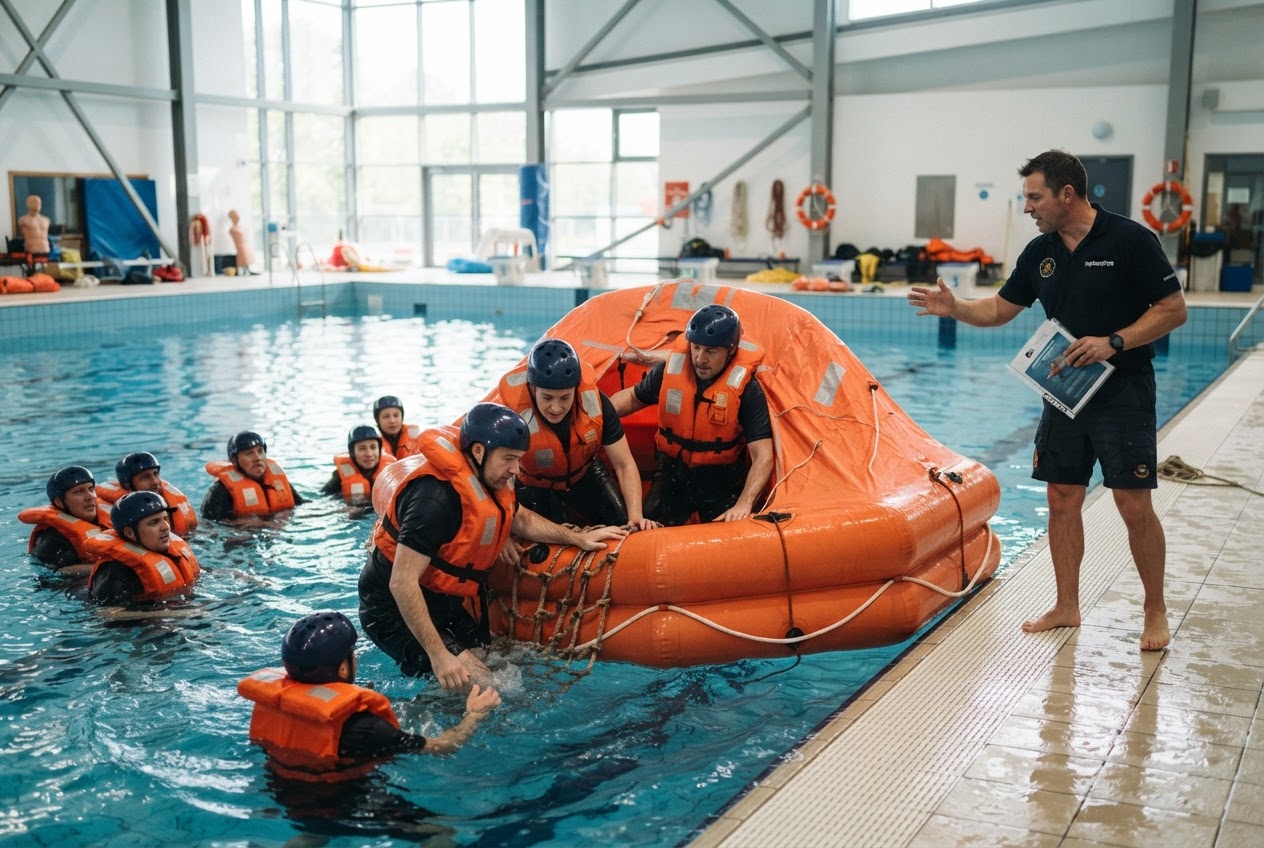
Engineering and galley roles usually need trade qualifications or professional kitchen experience first. Whichever role you choose, you will need STCW Basic Safety Training and an ENG1 medical. Pick one department for your CV: a CV that says “anything” reads as “no idea”.
Deck and bridge
The deck team keeps the outside of the yacht immaculate, drives the tenders and runs the water toys. The bridge officers navigate and keep watch.
| Role | What they do | Typical monthly pay |
|---|---|---|
| Captain | Responsible for the safe operation of the yacht, its crew and guests; reports to the owner | €4,000–15,000 |
| Chief Officer / First Mate | Second in command; shares the captain’s duties | €3,000–13,500 |
| Bosun | Leads the deckhands and is usually the main tender driver | €2,500–5,500 |
| Lead Deckhand | Senior deckhand who runs daily tasks | €2,500–5,000 |
| Deckhand (junior) | Exterior maintenance, tenders, line handling | €2,000–3,000 |
Interior
The interior team runs guest service, housekeeping and laundry. On large yachts, roles specialise into service, housekeeping, laundry and spa.
| Role | What they do | Typical monthly pay |
|---|---|---|
| Purser | Interior administration on large yachts: inventory, purchasing, accounts | €5,000–9,000 |
| Chief Steward(ess) | Leads and trains the interior team | €4,500–8,500 |
| 2nd Steward(ess) | Interior care and guest service | €3,000–6,500 |
| 3rd Steward(ess) | Interior care and guest service | €2,500–4,000 |
| Junior Steward(ess) | Housekeeping, laundry and service support | €2,000–3,500 |
Engineering
Engineers keep the engines, generators and every system on board running. Larger yachts also carry technical specialists.
| Role | What they do | Typical monthly pay |
|---|---|---|
| Chief Engineer | Runs engineering, planned maintenance and contractors | €5,000–15,000 |
| 2nd / 3rd Engineer | Assist the chief with mechanical and electrical systems | €2,500–10,000 |
| ETO | Electronics, navigation, radio and satellite systems | €4,000–8,000 |
| AV/IT Officer | Audio-visual, internet and interior electronics | €4,000–7,000 |
Galley
| Role | What they do | Typical monthly pay |
|---|---|---|
| Head Chef | Guest and crew meals, provisioning, food safety and budget | €6,000–10,000 |
| Sous Chef | Supports the head chef | €3,500–8,000 |
| Crew Chef | Cooks for the crew on larger yachts | €3,000–5,000 |
Pay ranges are YaCrew’s published figures and vary widely with yacht size, private or charter use, location and experience. Other salary surveys put junior deckhands higher, at around €2,800–3,200 a month; see our yacht crew salary guide. Tips on charter yachts come on top.
How people move up
Progression comes from sea time, references and further certificates. A deckhand who builds sea time and takes officer training can work toward bosun, officer and eventually captain. A junior stew can move to 2nd stew and then chief stew within a few seasons with strong references. The first job is the hardest one to get.
Chosen your department? The Yacht Job Application Kit has a separate CV template for deckhands and for stewardesses, plus the emails to send to agencies and captains. New to it all? Start with how to get a job on a yacht with no experience.



Leave a Reply